Smart Grid 2.0 Security
- January 21, 2024
- Comments off
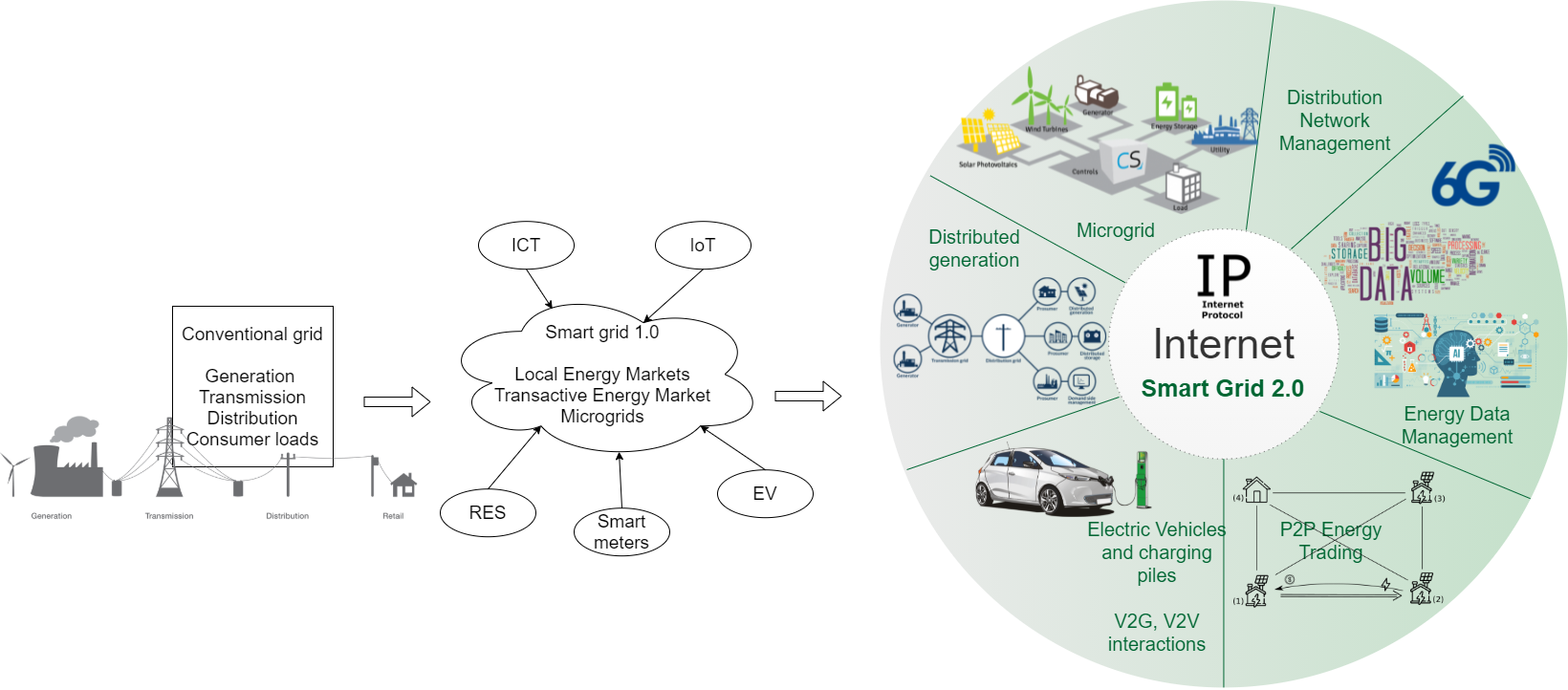
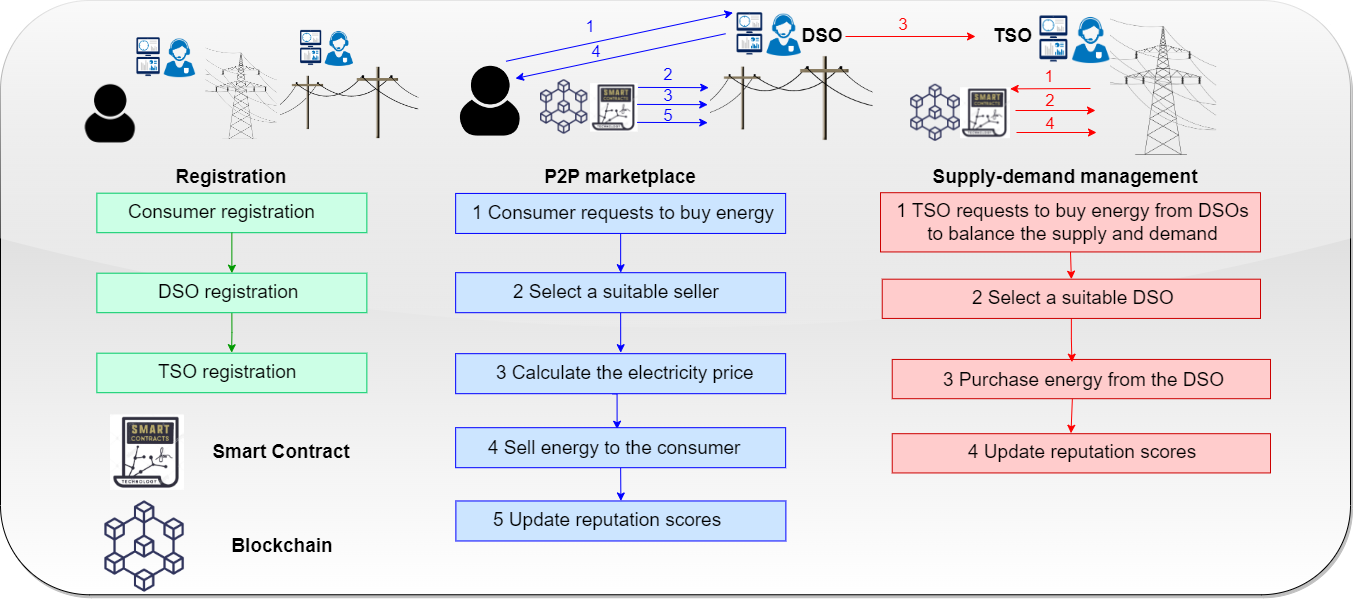
The futuristic energy grids comprise of predominantly renewable generation, to align with the sustainable development goals. This would require integration of renewable energy sources at different levels of the power system out of which, consumers turning into power producers, often referred to as prosumers is an important aspect. Prosumers who generate excess power beyond self-consumption […]
Read More
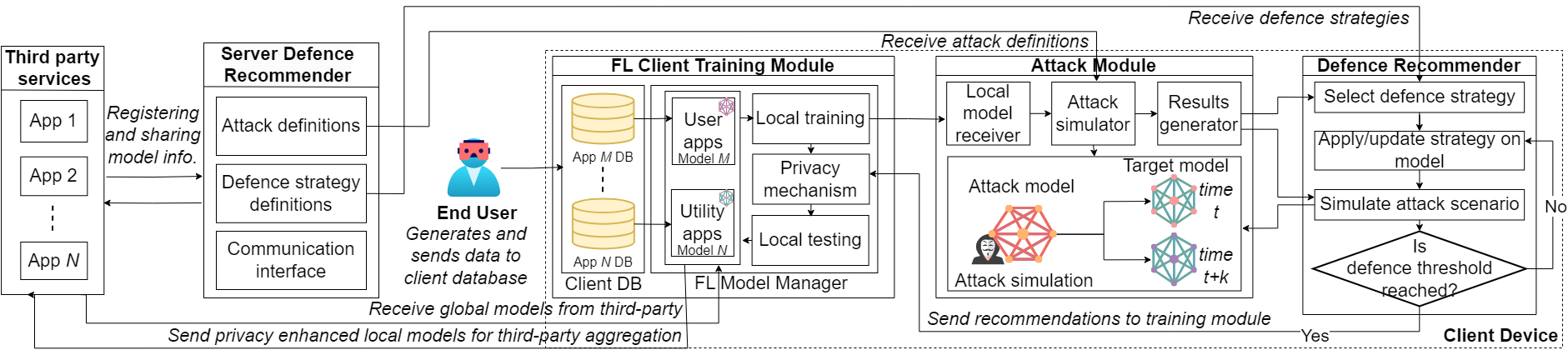
An emergence of attention and regulations on consumer privacy can be observed over the recent years with the ubiquitous availability of IoT systems handling personal data. Federated Learning (FL) arises as a privacy-preserved Machine Learning (ML) technique where data can be kept private within these devices without transmitting to third parties. Yet, many privacy attacks […]
Read More
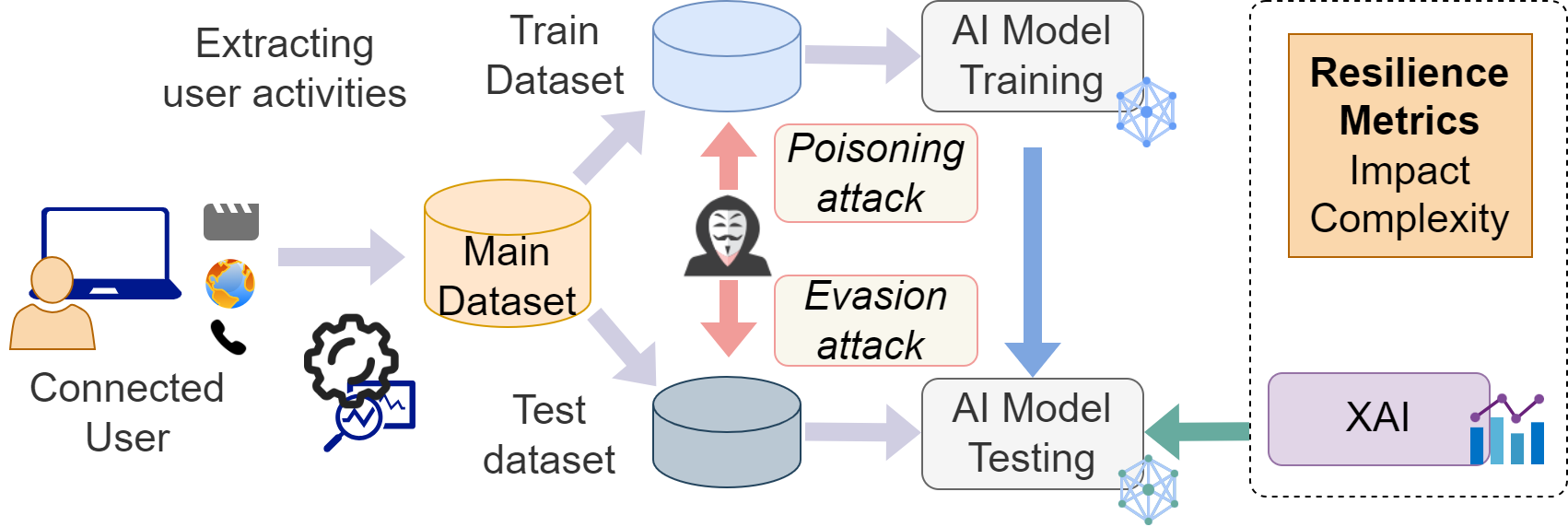
A wide adoption of Artificial Intelligence (AI) can be observed in recent years over networking to provide zero-touch, full autonomy of services towards the next generation Beyond 5G (B5G)/6G. However, AI-driven attacks on these services are a major concern in reaching the full potential of this future vision. Identifying how resilient the AI models are […]
Read More
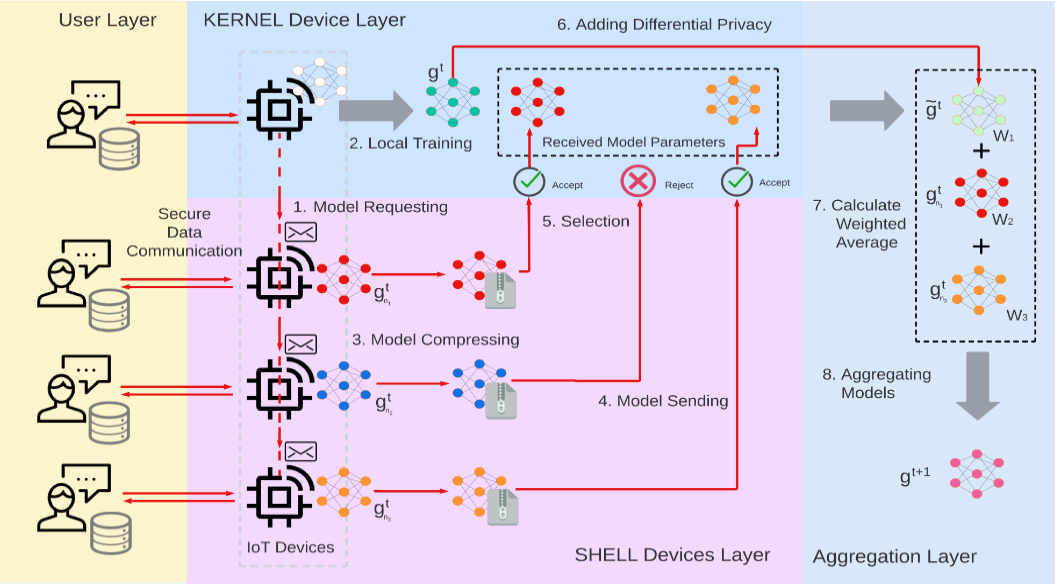
Federated learning (FL) is an intriguing approach to privacy-preserving collaborative learning. Decentralised FL is achieving increased favour for investigation due to the mitigation of vulnerability for a single point of failure and more controllability for end users over their models. However, many existing decentralised FL systems face limitations, such as privacy concerns, latency in aggregation, […]
Read More
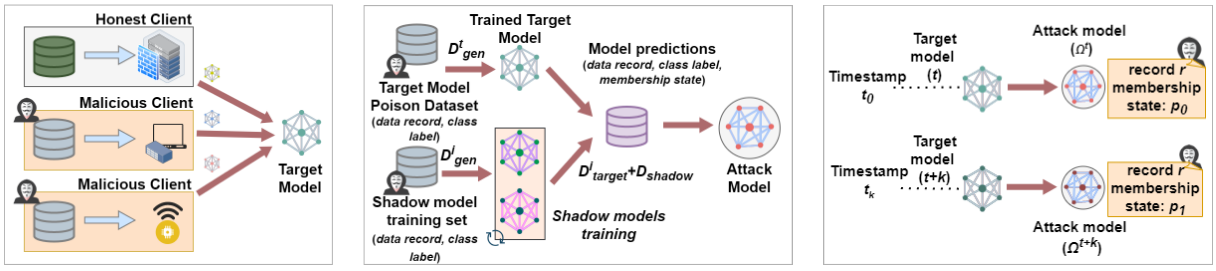
Federated Learning (FL) is an emerging privacy-preserved distributed Machine Learning (ML) technique where multiple clients can contribute to training an ML model without sharing private data. Even though FL offers a certain level of privacy by design, recent works show that FL is vulnerable to numerous privacy attacks. One of the key features of FL […]
Read More
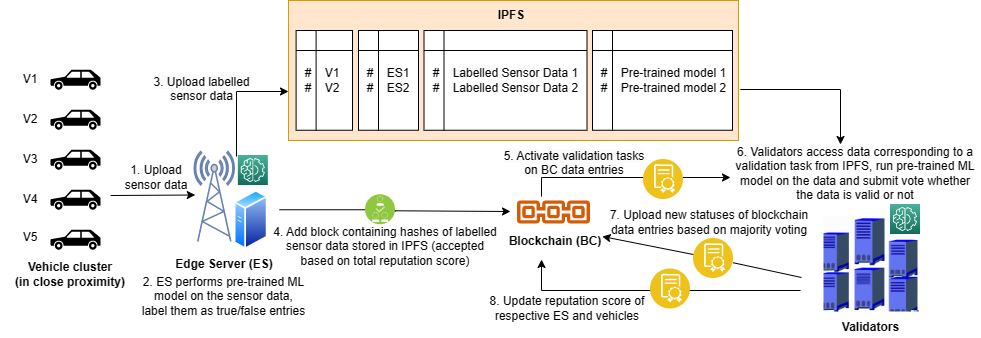
Blockchain offers cryptographically secure storage for recording transactions. However, one issue with blockchains is the problem of bad data and data reliability, where bad data refers to inaccurate, incomplete, or irrelevant data. This paper investigates how machine learning (ML) can be used to identify inaccurate sensor data added to a blockchain in Internet of Vehicles […]
Read More
Network slicing (NS) is a utilitarian technology that enables heterogeneous smart use cases in Fifth Generation (5G) and beyond networks. Smart hospitals require NS to realize its applications with diverse network requirements, which can not facilitate via traditional networks in hospital environments. NS can be performed under different strategies based on dynamicity, ownership, and application. […]
Read More
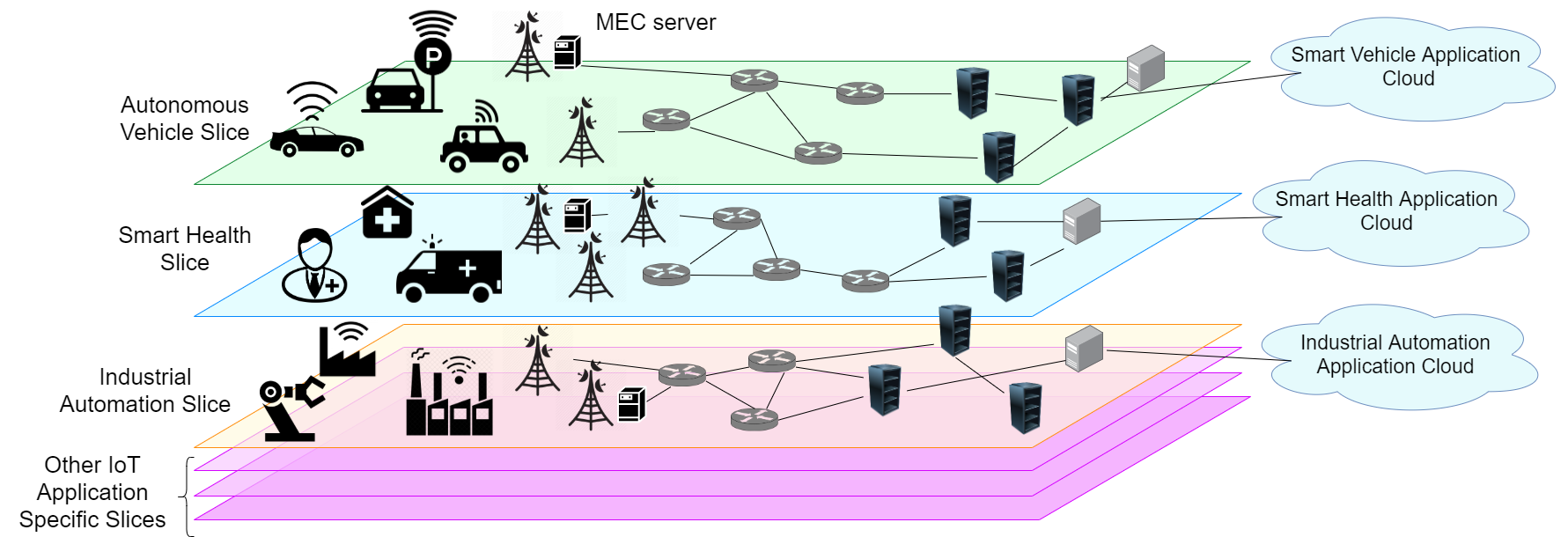
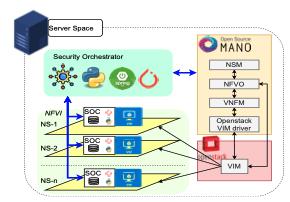
Network slicing is a utilitarian technology in future mobile networks that can facilitate heterogeneous network requirements of a plethora of applications over a shared physical network cost-effectively. Federated slicing, an extension of conventional network slicing, allows network services across multiple administrative domains in a seamless manner. Management of security operations in such a system is […]
Read More
Internet of Things (IoT) is a lucrative technology within the modern community that realizes the concept of the smart world, by expanding within a myriad of applications. Existing wireless networks require a radical change to fulfill the network requirements and cater the rapid expansion of the IoT ecosystem. 5G architecture is specifically designed to facilitate […]
Read More